
Workplace Anaphylaxis Training
22578VIC Course in First Aid Management of Anaphylaxis
For a person with a severe allergy, a familiar face who knows what to do can make an enormous difference.
This nationally recognised course helps your staff recognise anaphylaxis, use an adrenaline autoinjector and follow the correct emergency response.
We provide on-site group training for schools, childcare services, workplaces and community organisations across Melbourne.
Groups of 10 or more participants.
Course Information
Course: 22578VIC Course in First Aid Management of Anaphylaxis
Delivery: On-site group training
Location: Melbourne and surrounding areas
Certificate: Nationally recognised Statement of Attainment
Renewal: Recommended every 3 years
Be Ready When an Allergic Reaction Happens
Anaphylaxis can develop quickly. Staff may need to recognise the warning signs, locate the person’s medication and begin treatment before an ambulance arrives.
This course allows your team to practise those decisions in a supportive environment. Participants learn how to follow an ASCIA Action Plan, administer an adrenaline autoinjector and continue caring for the person until emergency services take over.
Our trainers bring real frontline experience into the classroom while keeping the training practical, calm and easy to understand.
Be Ready When an Allergic Reaction Happens
Anaphylaxis can develop quickly. Staff may need to recognise the warning signs, locate the person’s medication and begin treatment before an ambulance arrives.
This course allows your team to practise those decisions in a supportive environment. Participants learn how to follow an ASCIA Action Plan, administer an adrenaline autoinjector and continue caring for the person until emergency services take over.
Our trainers bring real frontline experience into the classroom while keeping the training practical, calm and easy to understand.
What Your Team Will Practise
Participants will practise how to:
Recognise mild, moderate and severe allergic reactions
Follow an ASCIA Action Plan for Anaphylaxis
Administer an adrenaline autoinjector correctly
Position and monitor a person experiencing anaphylaxis
Call Triple Zero (000) and provide clear information
Respond when symptoms continue or return
Reduce anaphylaxis risks within the organisation
Complete management plans, risk assessments and incident reports
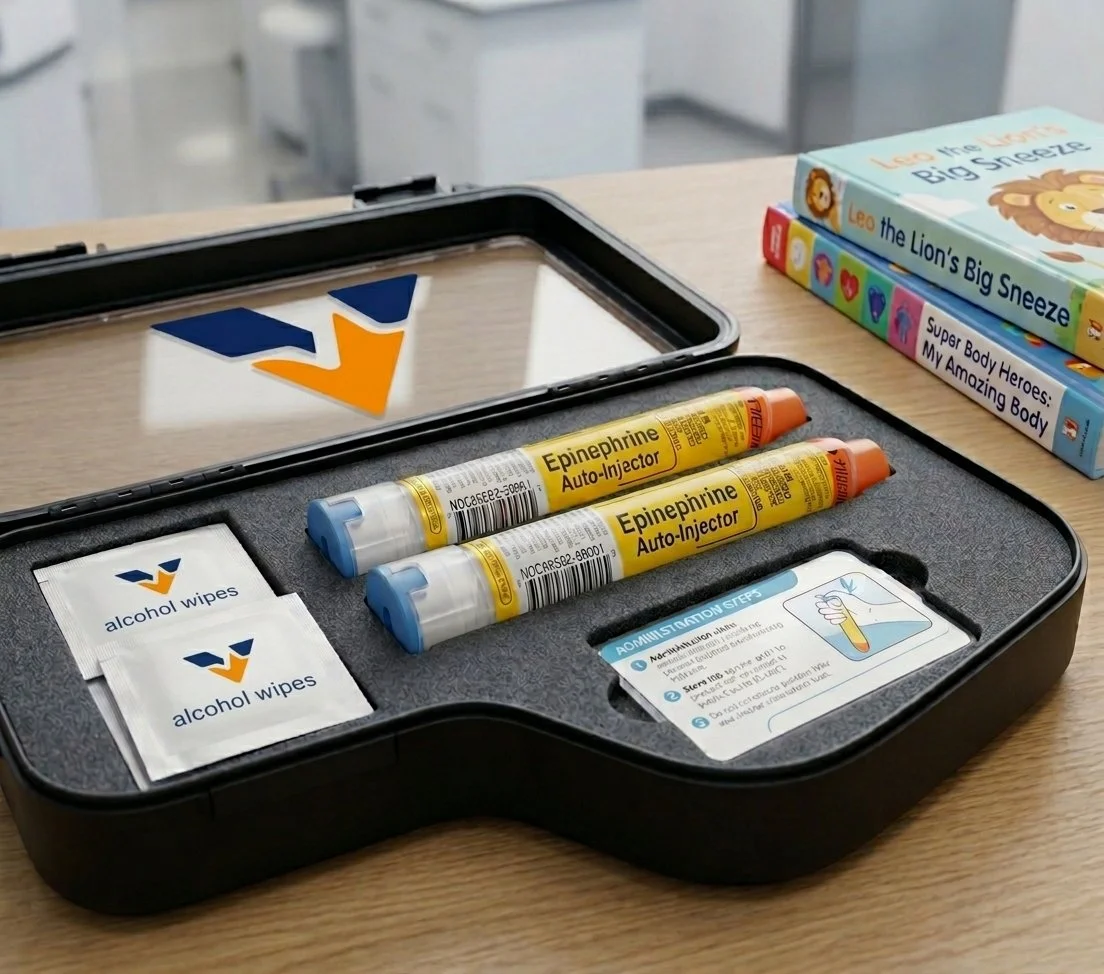
Training includes realistic scenarios and hands-on practice with adrenaline Epipen training devices.
Who Should Attend?
This course is particularly useful for organisations responsible for people with known allergies, including:
Schools and education support teams
Childcare and early-learning services
Disability and community support providers
Healthcare and care services
Sporting and recreation organisations
Hospitality and food-service workplaces
Businesses with anaphylaxis procedures or training requirements
Not sure whether your staff require this course? Tell us about your workplace and who you support. We can help you identify the most suitable training option.
Make Anaphylaxis Response Part of Your Safety Plan
Training together helps staff understand who will get the medication, who will call Triple Zero and how they can support the person until help arrives.
Contact us with your estimated participant numbers, preferred location and suitable dates. Please also let us know about any accessibility or communication requirements so we can plan the session properly.

-
An individual undertaking this course with Allens Training Pty Ltd will need to demonstrate the following to be eligible for entry:
An official form of photo identification (e.g., driver’s licence, passport, or student ID).
As a minimum, entrants to the course must have literacy and numeracy competencies equivalent to the Australian Core Skills Framework Level 3. An example of an ACSF Level 3 competency is being able to read and comprehend the ASCIA Action Plan for Anaphylaxis, use and respond to communication techniques to request appropriate emergency assistance at the scene of a First Aid incident and use writing skills to complete incident reports.
Physical fitness to be able to meet the demands of the practical demonstration skills.
To successfully complete this course, students will need to demonstrate the following language, literacy, numeracy and digital (LLND) skills during training and assessment:
Learning: Follow clear steps and ask questions if help is needed understanding a process.
Reading: Read and understand simple health instructions, signs, and emergency plans.
Writing: Write down simple notes or fill in forms with basic personal or incident details.
Oral communication: Listen carefully and speak clearly when giving or receiving basic information.
Numeracy: Understand and use simple numbers, like measuring time or doses when required.
Digital Literacy: Use a mobile phone or basic device to read messages, follow online instructions, complete online forms or access learning resources.
Online learning: Students must have basic digital literacy skills to navigate online platforms, complete assessments, and access course materials. Before enrolment, students should assess their ability to engage in online learning. Support is available where required.
The online learning program can be found in the student portal. Students must have access to a computer, smart phone, tablet or other electronic device with access to the internet to complete the online studies and associated assessment tasks.
Delivery mode: Online with face-to-face: The online pre-course learning and theory assessment is expected to take approximately 2.5 hours to complete. These timeframes are estimates. Individuals with prior experience in similar training may complete the online component in less time, while those new to the subject may need more time to complete all the learning content and theory questions.
Delivery mode: Blended and/or Blended/Refresher: The online component is expected to take approximately 1 hour to complete. This component provides a brief overview of the content that will be covered during the face-to-face session. Please note that these timeframes are estimates. Individuals with prior experience in similar training may complete the online component in less time, while those new to the subject may need more time to work through the online component.
-
This course can be delivered/assessed in the workplace or at facility organised by the training provider.
-
The following units will be included in your certificate:
22578VIC - Course in First Aid Management of Anaphylaxis
VU23090 - Provide first aid management of anaphylaxis
VU23091 - Develop risk minimisation and risk management strategies for anaphylaxis
-
Refresher minimum duration 120 minutes
Blended minimum duration 120 minutes
Face-to-face minimum duration 180 minutes
Online with face-to-face minimum duration 15 minutes
-
Individuals undertaking this course will be expected to complete both written and practical assessment tasks.
Practical demonstrations:
Simulated Scenario – Administer the Adrenaline Autoinjector for Anaphylaxis
Simulated Scenario – First Aid for Allergic Reaction
Documentation:
Anaphylaxis Incident Report Form
Anaphylaxis Risk Assessment Form
Individual Anaphylaxis Management Plan
Theory assessment:
A written exam consisting of multiple choice questions.
-
This certificate has an industry recommended renewal period of 3 years.

Other Courses
HLTAID009
Provide Cardiopulmonary Resuscitation

HLTAID011
Provide First Aid

22702VIC
Course in the Management of Asthma Risks and Emergencies
Learner Rights, Responsibilities, and Support
Please note that enrolment to this course is made with Allens Training Pty Ltd RTO 90909. Please refer to the student handbook located on the RTO website allenstraining.com.au (https://allenstraining.com.au/students/student-handbook) for all details relating to rights and responsibilities including complaints and appeals.